We detect what you suspect.

Author: Martine Davis

The Hidden Danger: How Incomplete Air Quality Inspections Miss Mold in HVAC Systems, Carpets, and Wall Cavities

The Hidden Danger: How Incomplete Air Quality Inspections Miss Mold in HVAC Systems, Carpets, and Wall Cavities

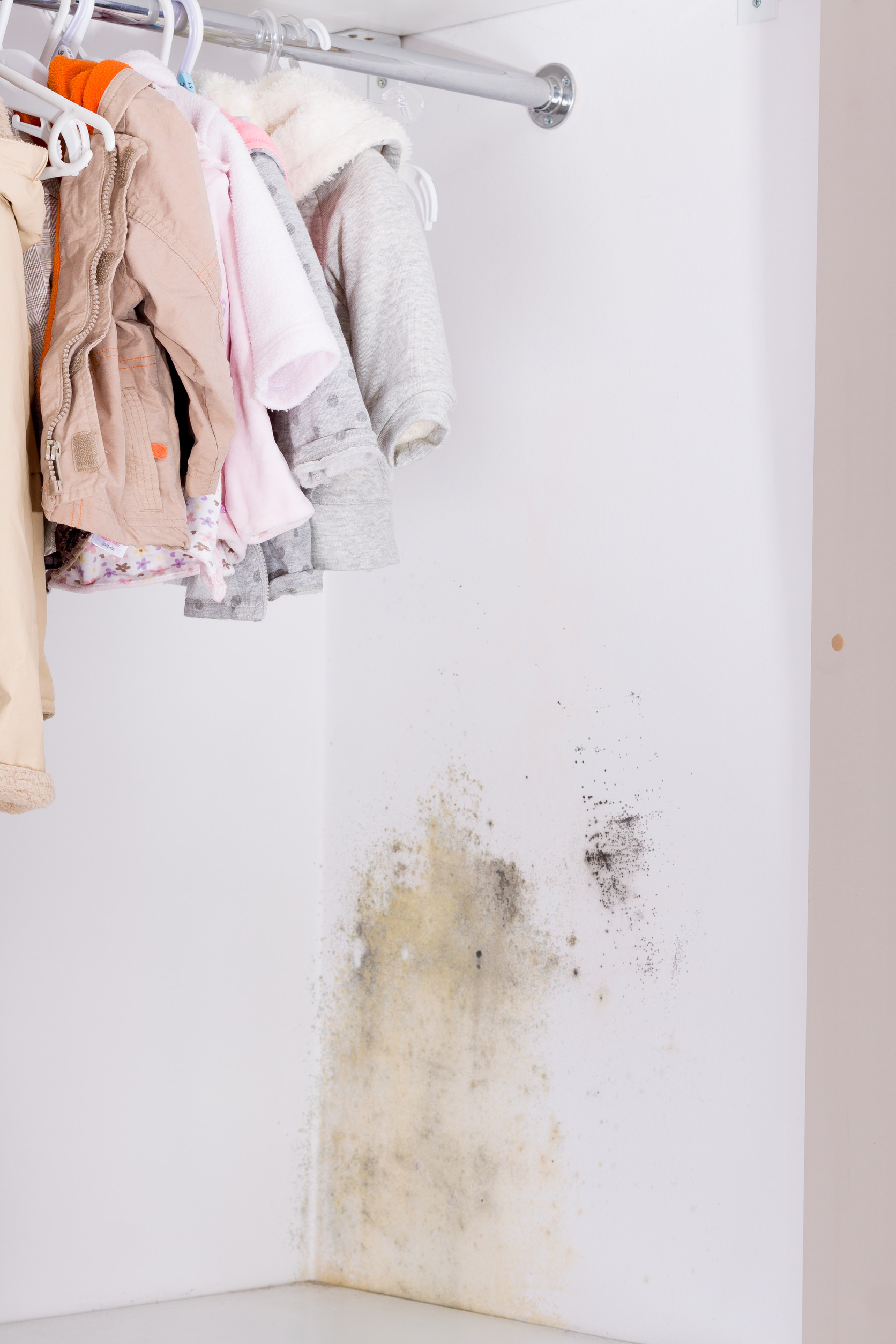
People who arrange an air quality inspection want to know for sure that their indoor environment is safe. Sadly, a lot of inspections merely look at the surface. Even if reports say everything is “normal,” mold can still be growing in HVAC systems, deep in carpets, or even inside wall cavities without anyone knowing.

Not doing all the tests gives people a false sense of security, which lets mold problems get worse over time. Knowing what inspections don’t cover and what a full inspection should contain can mean the difference between a safe home and a dangerous, expensive issue.

Why standard air quality checks often miss mold
A lot of air quality tests just use a few procedures, such as taking brief air samples from one or two rooms. These tests can find mold spores in the air at that particular moment, but they don’t show where mold is hiding.

Mold does not grow uniformly in a building. It does well in hidden places where moisture collects and air can’t move around much. If spores are stuck in walls, ducting, or thick materials like carpet padding, they may not show up in airborne samples until the contamination gets really bad.

This means that a building can have a lot of mold and still get air sample readings that are “acceptable.”


HVAC Systems: A Major but Overlooked Mold Reservoir

HVAC systems are one of the most prevalent areas for mold to grow, but they are also one of the most typical things that inspectors miss.
When dust and organic material mix with moisture from condensation, they make the perfect conditions for mold to thrive. Favorite growing spots are:
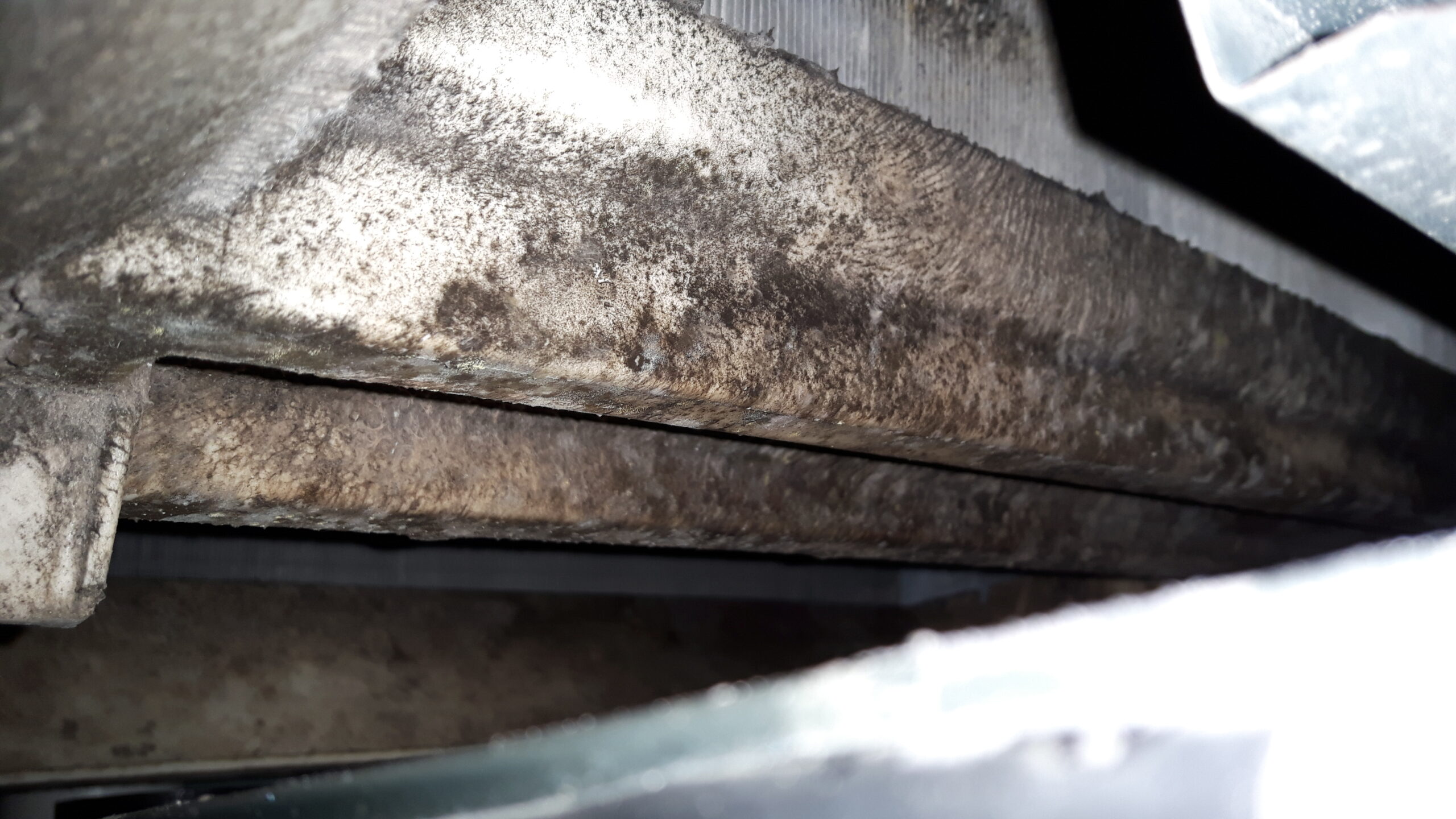
Mold underneath HVAC Coil

• Ducts
• Evaporator coils
• Drain pan under air conditioning coil
• Compartments for blower and filter

• Insulation in the air handler

Once mold gets inside the HVAC system, it usually stays in but it can release a gas called Microbial Volatile Organic Compounds (MVOCs) which is the musty odor emitted by molds during their digestive process. This is why when the A/C season starts you may notice a “wet sock” or musty odor coming out of your vents. This is a sure sign that mold is present and reactivating inside the HVAC unit. But an air sample won’t capture this gas because air samples look for spores.

Carpets and Carpet Padding: Hidden Mold Beneath the Surface

Over time, carpets work like filters, trapping dust, dirt, moisture, and mold spores. When water gets into carpet fibers, it can get into the padding and subfloor. This can happen via carpet shampooing, spills, humidity, pet accidents, leaks, or flooding.

A lot of the time, mold grows under the carpet, where you can’t see it from above.
This kind of contamination might not show up in regular air samples because:

• Mold spores can get stuck in the fibers of carpets.
• The spores may not be disturbed enough by airflow to be found

• The time for sampling may not be long enough
• Testing may not occur near the contamination source

If you don’t test the carpet and padding, mold can grow under the floor for years without you knowing.


Mold Inside Wall Cavities: The Most Commonly Missed Contamination

Wall cavities are great places for mold to grow, especially when there is hidden moisture from:

  • Leaks in the plumbing
  • Leaks in the roof
  • Leaks from windows
  • Water droplets (condensation)
  • Damage from flooding
  • Not enough insulation

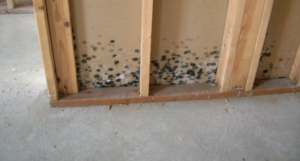
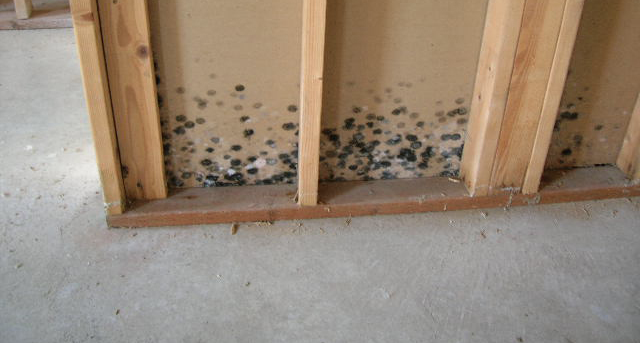
Mold can develop on drywall, wood frame, insulation, and other structural materials without leaving any apparent symptoms on the wall surface.

Air samples might not show mold inside walls because the spores are trapped in small spaces. Testing may not show the full degree of contamination unless there is vigorous airflow bringing spores into the space.

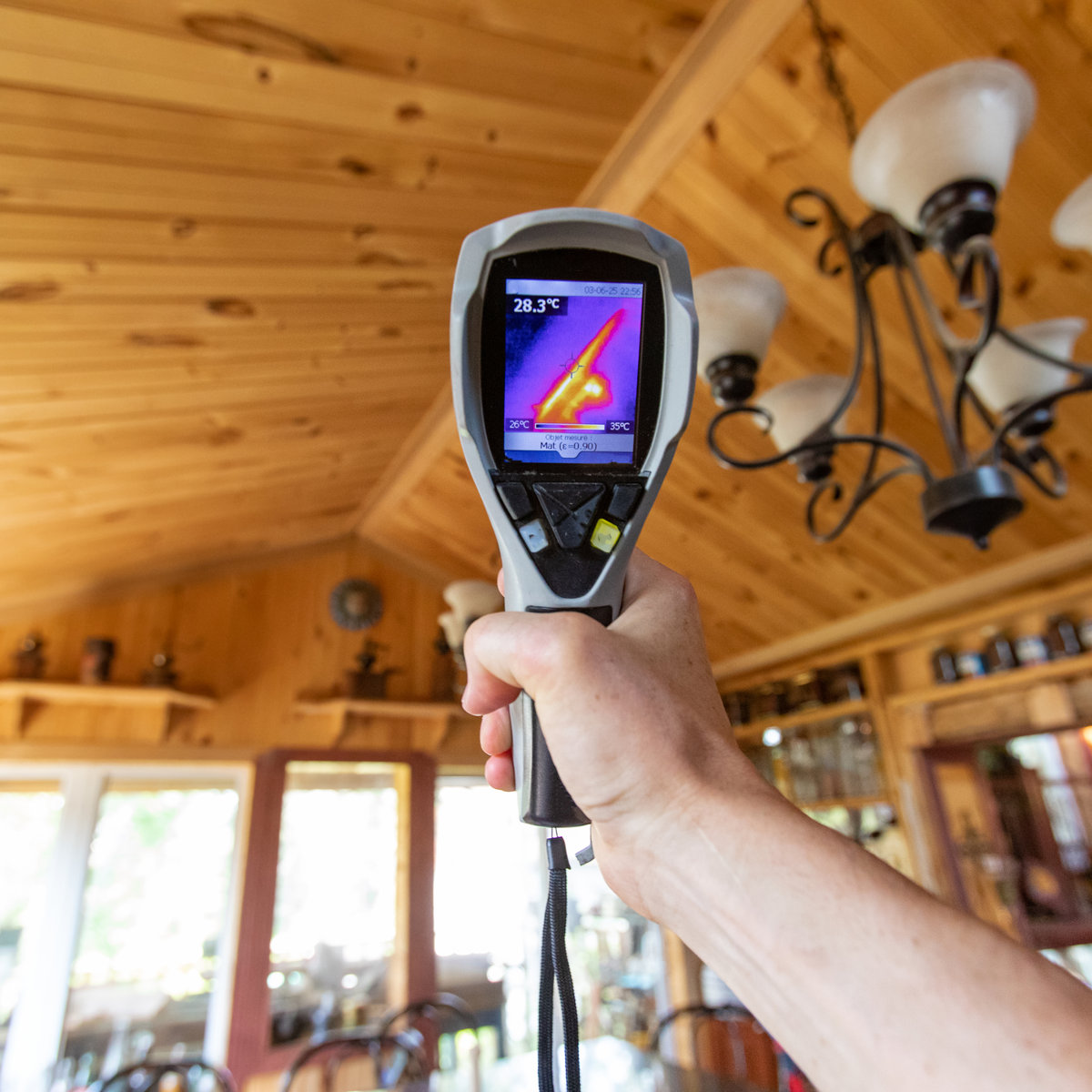
Inspectors can easily miss mold that is hidden behind walls even if they use moisture meters and infrared cameras because these tools only work if the wall is still wet. If the wall got wet several months ago from an ice dam or a roof leak, everything inside the wall is dry but mold is still there waiting for the right temperature and humidity.

This also explains why on some days you will notice a musty odor coming out of an outlet but some days you don’t. If the wind is blowing towards that side of the house, the mold gas inside the wall will come into the room and be noticeable. Other times, it won’t.


The Limitations of Air Sampling Alone

Air sampling is a helpful instrument, but it has several limitations. It shows you what particles are in the air at a certain time, but it doesn’t provide you a full picture of the building’s state.

Since mold is typically buried in things instead than floating around in the air, only looking at air samples can lead to wrong or partial results.

What a Comprehensive Mold and Air Quality Inspection Should Include

A thorough inspection goes beyond basic air sampling and includes multiple methods to locate hidden mold sources.

A complete inspection should involve:

Testing of HVAC components
Inspectors should test the evaporator coil area, ductwork, drains pans, ducts or any combination of these. If the system is older, testing for bacteria and yeasts in addition to molds may be helpful because these can cause health effects and even infections.

Moisture detection
Using moisture meters and infrared cameras may identify hidden moisture behind walls, ceilings, and floors but if water damage is not recent, materials are now dry so these tools are not sufficient. Testing inside wall cavities is a must.

Assessment of building history
Past leaks, flooding, toilet or tub overflows, old windows or humidity issues provide critical context for identifying hidden mold risks and should be followed up with testing of wall cavities, especially if occupants are symptomatic.


The Risks of Incomplete Inspections

When mold is missed, the consequences can escalate over time.

Hidden mold can lead to:

  • Persistent musty odors
  • Ongoing health symptoms for occupants
  • Worsening contamination
  • Rot, decay and structural damage of building materials
  • Reduced property value
  • Increased remediation costs

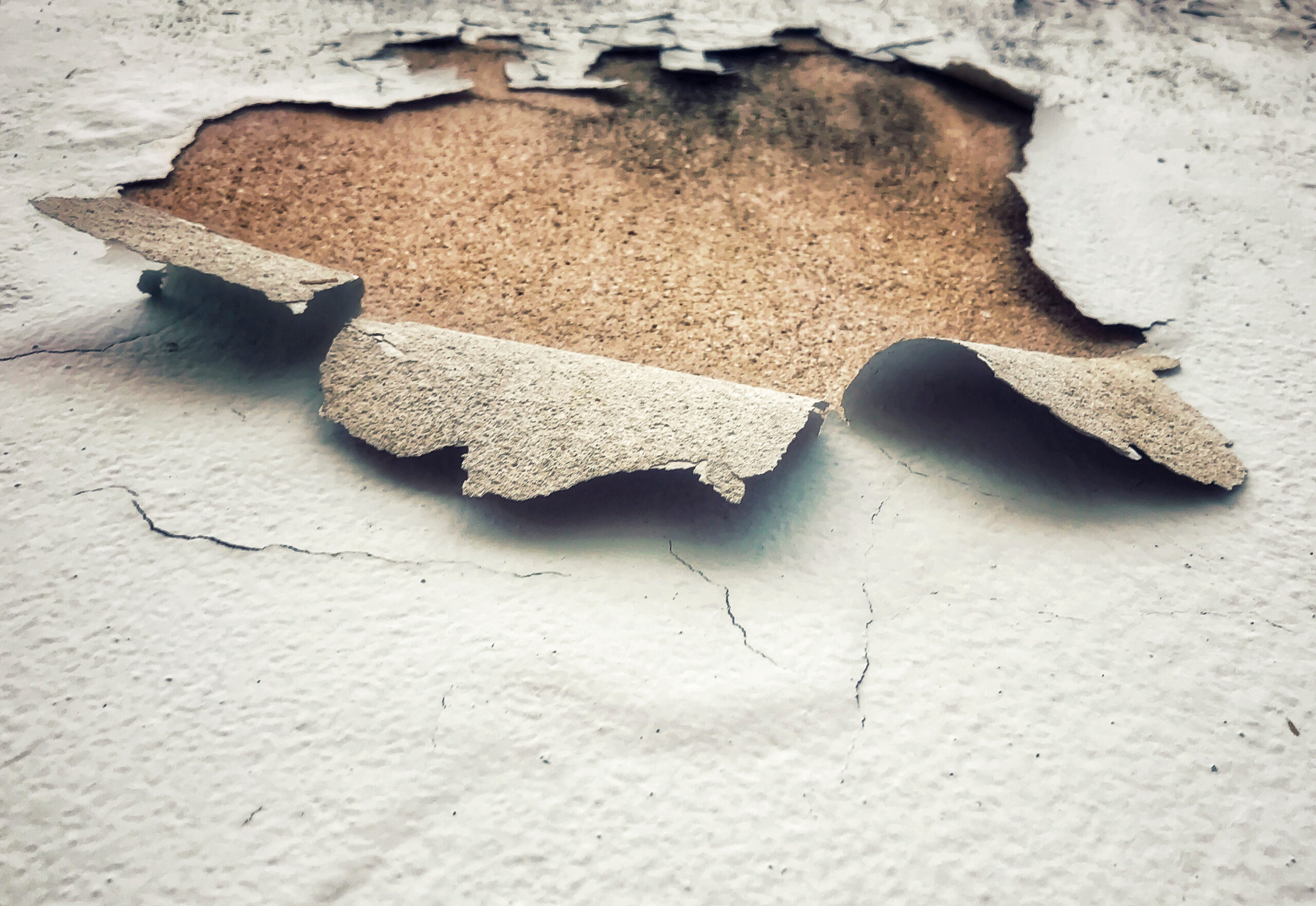
According to the EPA, rippling of wall coverings , cracked drywall tape, peeling paint or other signs of water damage  “frequently indicate that water has leaked, and hidden mold growth and damage are likely.”

Early detection is critical. The longer mold remains hidden, the more difficult and expensive remediation becomes. Complete inspections provide clarity, not false reassurance.


Final Thoughts: Don’t Settle for Air Samples in a few rooms

If you think there might be mold, have unexplained health problems, or smell musty smells, it’s important to choose an inspection that looks at the whole building and not just the air in a few areas.

Mold that is hidden doesn’t just go away on its own. To find it, you need experience, the right tools, and a careful, organized plan.

A full inspection protects your health and your money.

If you are concerned about mold in your building, consider scheduling a comprehensive inspection that includes testing of HVAC systems, carpeting, and wall cavities. Call or Text Indoor Environmental Testing at 608-448-6768 (Madison, WI) or 615-576-0808 (Nashville, TN).You can also book an appointment online at www.airinspector.com


Is Shampooing Ruining your Carpet?

Is Shampooing Ruining your Carpet?

Ever notice a “wet dog” or “musky” smell after shampooing carpets? Adding moisture to carpet by shampooing might cause mold in carpet or existing mold to reactivate. Frequent shampooing can increase mold population and ruin your carpets if moisture is left behind each time.

People often think that shampooing carpets is a way to “deep clean” them and make the air inside better. But from a technical and microbiological point of view, shampooing can lead to carpet mold when water gets into the backing, padding, and the subfloor underneath the carpet. Mold simply needs a little bit of moisture to grow, and many carpet cleaning processes make the conditions perfect for mold to thrive.

The US EPA says “Mold can grow on or fill in the empty spaces and crevices of porous materials, so the mold may be difficult or impossible to remove completely“.

Knowing how moisture works in carpet systems helps explain why shampooing can sometimes let mold grow faster instead of getting rid of it.

Mold only needs water, organic matter, and air to grow.

Mold spores are constantly present indoors, even though they are very little. These spores stay inactive until they get some moisture. Mold can start to grow in 24 to 48 hours if the conditions are right and there is enough moisture.

Carpet is a great place to be because it has:
• Organic waste, like skin cells, dust, and fibers
• Limited airflow under the surface
• Several layers of porous material that hold moisture
• Shielding from light and drying

When you shampoo your carpet, the water awakens mold spores that are already deep inside the carpet system.

Carpet shampooing adds moisture to the surface and beyond. Even professional carpet cleaning tools can’t get rid of all the moisture that gets into the carpet while shampooing.

Scientific tests and observations in the field demonstrate that a lot of moisture stays trapped in the carpet fibers, backing, adhesive layers, padding, and the subfloor underneath the carpet.

These layers act like a sponge, soaking up and holding water.

The top of the carpet may dry out in a few hours, but the deeper layers may stay wet for 24 to 72 hours or longer, depending on the humidity, air flow, temperature, thickness of the carpet, and kind of padding. This wetness that lasts a long time is perfect for mold to thrive.

Carpet padding has a lot of holes in it and can soak up water. It is quite hard to dry padding all the way through once it becomes wet.

Padding is also full of organic matter, such as dirt, dust, skin cells, and microbes. Mold uses these things as food.

Because padding doesn’t let air circulate through it, moisture can stay trapped for long periods of time, letting mold colonies grow and spread without anyone noticing.

Moisture migration can move mold to places where it wasn’t before.

Moisture can move:
• Across the back of the carpet
• Down into the padding
• Into wooden floors
• Into construction materials that are next to it

This process can wake up mold spores that were dormant in places that didn’t show any signs of contamination before.
Because of this, shampooing can make the area of mold growth bigger by accident.

Mold often grows under the carpet surface.

One of the biggest dangers of carpet shampooing is that mold usually grows below the surface that you can see, like on the wooden flooring, along tack strips, and under baseboards. People who use the area may not know that mold is growing until they smell it or start to feel sick.
Cleaning the surface does not get rid of mold that is forming under the carpet.

If the humidity stays high inside after cleaning, mold is more likely to form.
This problem gets worse when there isn’t enough air flow, windows are closed, and the air doesn’t move about enough.

Leftover cleaning products can give mold more nutrients.

Some carpet cleaning products leave behind a film. These residues may have organic molecules in them that mold might use as extra sustenance. Cleaning residues, when mixed with moisture and dust that is already there, might actually speed up the growth of microbes instead of stopping it.

Carpet Mold Growth Often Goes Unnoticed

Contamination may not be obvious because mold grows underneath the surface.
Common signals of a problem are musty smells, complaints about the air quality inside that don’t go away, allergy or respiratory symptoms, smells that get worse when the humidity rises, and symptoms that get worse after cleaning the carpet.
If spores are stuck in the carpet fibers, air testing might not always find mold right away.

Conclusion

Shampooing can add moisture to the air, which can start and speed up mold growth.
When you shampoo your carpet, you add moisture to a layered, porous system that is hard to dry all the way through. This moisture wakes up latent mold spores and makes the carpet backing, padding, and underfloor materials perfect for microbial development.
Once mold has settled under carpet, regular cleaning procedures can’t get rid of it very well.

To keep mold from growing, you need to control the moisture correctly.
To stop mold from growing, you need to keep the carpet systems as dry as possible.
Cleaning the carpet may not be enough to get rid of mold if you think it is there.

Last Thoughts

Shampooing carpets might make them seem better on the surface, but it can also generate circumstances that are good for mold growth when moisture gets into deeper layers. Because carpet systems hold onto moisture and trap dirt, adding water without making sure it dries completely can make the air inside worse over time.
To stop mold from growing where it shouldn’t and keep indoor spaces safe, it’s important to know how moisture affects carpet materials.

In our practice, lab results show better results w dry vacuuming slowly several times in different directions than after carpet shampooing. We also see very high mold counts in carpet that is shampooed often.

If you’re not sure, we advise clients to get the carpet dust tested and find out what’s really lurking deep in those fibers. Find out more about what home furnishings can be tested here.

Nashville commercial air quality testing

Critical Alert: Nashville Commercial Air Quality Issues Could Be Costing You More Than You Think

Poor Nashville commercial air quality isn’t just uncomfortable—it can silently impact productivity, trigger chronic health problems, and expose businesses to liability risks. Whether you manage a corporate office, retail store, school, medical facility, or industrial building, indoor air quality (IAQ) should never be an afterthought.

At Indoor Environmental Testing, we help businesses throughout Nashville identify hidden air quality issues and develop data-driven strategies to improve workplace safety and comfort. Our testing is 100% objective—we don’t sell remediation—so you get honest answers, not scare tactics.

Why Indoor Air Quality Is a Business Essential—Not a Luxury

Today’s employees, customers, and tenants expect more from the buildings they occupy. And they should. Contaminants in commercial environments can build up quickly and affect large groups of people, sometimes without anyone realizing it until symptoms worsen.

Common contributors to poor Nashville commercial air quality include:

  • Mold or mildew in ceiling tiles, drywall, and HVAC systems
  • Off-gassing from office furniture, carpets, or paint
  • Inadequate fresh air exchange from aging or undersized ventilation systems
  • Cleaning agents and maintenance chemicals releasing VOCs
  • Renovation or construction debris left behind in air ducts or wall cavities

Many of these problems remain invisible unless professional testing is performed—making air quality an unseen but very real threat.

Who Needs Commercial Air Quality Testing?

We provide Nashville commercial air quality testing for a wide range of industries and facilities, including:

  • Corporate offices concerned about employee wellness and productivity
  • Medical clinics and dental offices aiming to maintain clean clinical environments
  • Schools and daycares where children may be more vulnerable to pollutants
  • Retail stores and restaurants aiming to improve customer comfort and satisfaction
  • Apartment complexes and property managers addressing tenant concerns
  • Warehouses and manufacturing plants where dust and VOC exposure is common

If you’re in charge of a shared space and have never had a professional IAQ evaluation, now is the time.

What Are the Signs of Poor Commercial Air Quality?

You don’t need visible mold or a strange smell to have an air quality problem. Consider scheduling a test if you’ve noticed:

  • An increase in employee absenteeism
  • Recurring respiratory complaints or allergy-like symptoms
  • A pattern of “sick building syndrome” complaints
  • A recent water leak, HVAC problem, or renovation
  • Difficulty maintaining consistent temperature and humidity levels

These indicators could point to ventilation imbalances, elevated CO₂ levels, or hidden contamination—and they rarely resolve on their own.

What We Test For in Commercial Buildings

Our commercial assessments are comprehensive and customized. Depending on your property and concerns, we may test for:

  • Mold spores in the air or on surfaces
  • Volatile Organic Compounds (VOCs) from furniture, adhesives, and cleaners
  • Particulate matter (PM2.5 / PM10), especially in industrial or dusty environments
  • Carbon monoxide and carbon dioxide levels
  • Relative humidity and temperature fluctuations
  • Formaldehyde and other hazardous off-gassing chemicals
  • HVAC performance indicators, including moisture buildup or biological growth

Our findings are presented in a detailed report with easy-to-understand language, visual data, and actionable next steps.

Compliance, Liability & Reputation: Why Air Quality Impacts All Three

From OSHA complaints to negative online reviews, poor IAQ can hit businesses where it hurts. Routine Nashville commercial air quality testing shows that you take workplace safety seriously—and it can protect you from future legal and financial headaches.

Our assessments can be used to:

  • Respond to employee or tenant complaints
  • Satisfy insurance or building inspection requirements
  • Support green building certifications or wellness initiatives
  • Verify remediation effectiveness after a mold or moisture incident

Proudly Serving the Greater Nashville Business Community

We work with clients in Downtown Nashville, The Gulch, Green Hills, Brentwood, Franklin, East Nashville, and beyond. Whether you manage a boutique storefront or a sprawling corporate campus, our team delivers reliable, science-based indoor environmental testing in Nashville tailored to your facility’s unique needs.

Schedule Your Nashville Commercial Air Quality Test Today

In a competitive market, clean air is a competitive advantage. Don’t wait for complaints or code violations to take action.

Contact us today to schedule your Nashville commercial air quality test and get the information you need to improve indoor conditions—before small issues become big problems.

Nashville air quality test

Breathe Easier: Why a Nashville Air Quality Test Could Transform Your Health

You might be surprised to learn that indoor air can be two to five times more polluted than outdoor air — even in a clean, modern home. If you’ve been struggling with allergies, fatigue, or unexplained health issues, a professional Nashville air quality test could be the game-changer you need.

At Indoor Environmental Testing, we provide thorough, science-based air quality assessments that help you uncover hidden pollutants and create a healthier living or working space.

What’s Lurking in Your Indoor Air?

Invisible particles in your home or office air may include:

  • Dust and dander
  • Mold spores
  • Volatile Organic Compounds (VOCs)
  • Cleaning chemical residues
  • Pollen and allergens
  • Combustion byproducts (e.g., carbon monoxide)

A Nashville air quality test helps identify these contaminants, giving you the information you need to breathe easier and live better.

Signs You May Need an Air Quality Test

You don’t have to see pollution to feel its effects. Here are some signs it’s time to schedule a professional Nashville air quality test:

  • Headaches or brain fog that improve when you leave the house
  • Itchy eyes, sinus congestion, or frequent sneezing indoors
  • Persistent fatigue or sleep issues
  • Musty smells or past mold issues
  • Recent renovations or new furnishings that could off-gas VOCs

These symptoms are often misattributed to seasonal allergies or stress—but your indoor air might be the real culprit.

What We Test For

We offer comprehensive air quality testing that can include:

  • Mold spore concentration
  • VOC levels from furniture, paint, and flooring
  • Allergen levels (pollen, pet dander, dust mites)
  • Particulate matter (PM2.5 and PM10)
  • Temperature, humidity, and CO2 levels
  • Carbon monoxide and formaldehyde (upon request)

All tests are performed with high-quality, calibrated equipment and results are reviewed by a certified environmental expert.

Trusted by Nashville Families and Businesses

We’ve helped homeowners, schools, offices, and healthcare facilities throughout Middle Tennessee improve their indoor air. Whether you’re in East Nashville, The Nations, Franklin, or Mount Juliet, we bring the same level of professionalism and care to every property.

If you’re looking for comprehensive indoor environmental testing in Nashville, we’re here to help you get the clarity you deserve.

Schedule a Nashville Air Quality Test Today

Stop guessing about what’s in your air. Schedule your professional Nashville air quality test today and start building a safer, more breathable environment.

Contact us about our indoor environmental testing in Nashville

Nashville mold testing

Worried About Mold? Nashville Mold Testing Can Give You Peace of Complete Mind

If you’ve been feeling unwell at home or noticing strange odors that won’t go away, it might be time to consider Nashville mold testing. Even if you can’t see mold, it could still be affecting your air quality — and your health.

At Indoor Environmental Testing, we help homeowners and business owners across Nashville uncover mold issues with precision, honesty, and no hidden agendas. Our testing process is designed to deliver clear answers you can trust.

The Power of Knowing What’s in Your Air

Mold spores are microscopic — and once they’re airborne, they can spread throughout your space and even into your HVAC system. You might not always see mold, but its effects can be felt in:

  • Respiratory problems or chronic coughing
  • Persistent allergy symptoms indoors
  • Musty or earthy smells
  • Water damage that was never professionally addressed

With professional Nashville mold testing, you can detect problems before they spiral into costly repairs or health issues.

How Our Mold Testing Works

Our team uses industry-standard techniques including:

  • Air sampling to test for airborne mold spores
  • Surface sampling from walls, vents, or suspect materials
  • Humidity and moisture readings to locate hidden problem areas
  • Clear, lab-verified results with detailed reporting

We are a test-only company—meaning we do not sell mold remediation services. That ensures our results are impartial and focused entirely on your best interest.

When Is Mold Testing Necessary?

Consider using our Nashville mold testing services if you’ve experienced:

  • Recent flooding or pipe leaks
  • Ongoing allergy symptoms that improve when you’re away from home
  • A mold remediation project that needs post-clearance verification
  • Real estate transactions or pre-listing inspections
  • A general concern for indoor air quality and health

Serving the Greater Nashville Community

We proudly serve all areas in and around Nashville, including Bellevue, Hermitage, Mt. Juliet, Antioch, and more. Our clients include homeowners, landlords, real estate agents, and businesses who want accurate, science-backed information about their indoor environment.

As part of our commitment to environmental safety, we offer complete indoor environmental testing in Nashville that includes mold, allergens, VOCs, and more.

Schedule Your Nashville Mold Testing Appointment Today

Don’t let invisible threats linger in your air. Contact us today to schedule expert Nashville mold testing and take the first step toward a healthier home or workplace.

Contact us to schedule your appointment for indoor environmental testing in Nashville.

Nashville Mold Inspection

Nashville Mold Inspection Guide: Discover the Alarming Signs You Can’t Ignore

Mold can be more than just a nuisance—it can seriously impact your home’s structure and your family’s health. Whether you’re noticing musty odors, unexplained allergy symptoms, or signs of water damage, a professional Nashville mold inspection is your first line of defense.

At Indoor Environmental Testing, we provide thorough, unbiased mold inspections throughout the Nashville area to help you identify issues early and take control of your indoor environment.

Why Mold Inspections Matter in Nashville

Nashville’s climate is warm and humid for much of the year—conditions that are ideal for mold growth. Add in frequent rain, aging infrastructure, and occasional storm damage, and you have a perfect storm for moisture-related problems.

Common reasons local residents book a Nashville mold inspection include:

  • Recent water leaks or flooding
  • New or ongoing respiratory symptoms
  • Visible discoloration or spotting on walls, ceilings, or floors
  • Real estate transactions requiring pre-purchase inspection
  • Peace of mind after remediation or repairs

What to Expect From a Professional Mold Inspection

Our inspections begin with a visual assessment, but we don’t stop there. We use moisture meters, infrared cameras, and air sampling equipment (when needed) to uncover what the eye can’t see.

What sets us apart:

  • We do not offer remediation services—so our findings are 100% objective.
  • We provide easy-to-understand reports with actionable recommendations.
  • We inspect for mold growth, hidden moisture sources, and potential contamination zones.

If you’ve been searching for an honest and science-driven Nashville mold inspection, you’ve come to the right place.

When to Schedule a Mold Inspection

Not sure if it’s the right time to call? Here are a few red flags that suggest a mold problem might be hiding in plain sight:

  • Musty or earthy smells, especially after rain or humidity
  • Recent plumbing issues or appliance leaks
  • Recurring headaches, fatigue, or allergy-like symptoms indoors
  • Past mold remediation without recent follow-up testing
  • Water stains or warped building materials

Serving Greater Nashville With Integrity

From Germantown to Green Hills, and from East Nashville to Brentwood and beyond, we help homeowners and property managers across the metro area get clear answers and peace of mind. Our team brings years of experience in indoor environmental testing in Nashville, using state-of-the-art tools and protocols.

Schedule Your Nashville Mold Inspection Today

Don’t let mold go undetected. Schedule a professional Nashville mold inspection today and get the answers you need to protect your health and your home.

Learn more about our indoor environmental testing in Nashville

Nashville EMF Testing

Hidden Dangers? Why Nashville EMF Testing Is Gaining Urgent Attention

In today’s tech-saturated world, we’re surrounded by wireless signals, electronic devices, and high-voltage equipment—all of which emit electromagnetic fields (EMFs). While some exposure is unavoidable, elevated or chronic EMF levels in homes and workplaces are raising serious health concerns. That’s why Nashville EMF testing has become an increasingly important service for safety-conscious residents and businesses.

At Indoor Environmental Testing, we provide professional, unbiased EMF assessments using high-precision equipment and clear, science-backed reporting. If you’ve ever wondered whether EMF exposure could be affecting your health or comfort, we’re here to help you find out.

What Are EMFs—And Why Should You Care?

Electromagnetic fields are invisible waves of energy produced by:

  • Power lines and circuit breakers
  • Wi-Fi routers and smart home devices
  • Cell towers and 5G infrastructure
  • Computers, TVs, and game consoles
  • Microwaves, cordless phones, and Bluetooth devices

While EMFs are part of modern life, research has linked high levels of exposure to sleep disturbances, headaches, fatigue, difficulty concentrating, and more. For people with EMF hypersensitivity, even low levels can be deeply disruptive.

Who Should Consider Nashville EMF Testing?

Our clients seek Nashville EMF testing for many different reasons, including:

  • Unexplained sleep problems, anxiety, or fatigue
  • Recent home upgrades involving smart tech or solar panels
  • Proximity to cell towers, substations, or high-tension power lines
  • New baby or pregnancy concerns
  • Chronic health issues with no clear source
  • Peace of mind before purchasing or leasing a new property

In commercial settings, EMF exposure may also affect sensitive equipment or create workplace discomfort that goes unnoticed until it becomes a pattern.

What Happens During an EMF Assessment?

Our EMF evaluations include:

  • Magnetic field testing (low-frequency EMFs from wiring, transformers, etc.)
  • Electric field measurements (from appliances, outlets, or lighting systems)
  • Radiofrequency (RF) exposure (from wireless routers, cell towers, smart meters)
  • Mapping of EMF “hot spots” throughout your property
  • Clear explanations of what’s normal, what’s not, and what can be mitigated

We use industry-leading meters and record data across a full spectrum of EMF frequencies—something smartphone apps and DIY meters simply cannot match.

We Test—We Don’t Sell Fear

Indoor Environmental Testing is a testing-only company. That means we don’t sell shielding products, remediation services, or gadgets. Our job is to help you understand your exposure, so you can make informed decisions—not to upsell you on expensive solutions you may not need.

And as part of our broader approach to healthy buildings, we offer full-spectrum indoor environmental testing in Nashville to assess mold, VOCs, allergens, and more.
Serving Homes, Schools, and Workplaces Across Nashville

We provide EMF testing in Nashville and surrounding communities, including Franklin, Brentwood, East Nashville, and Bellevue. Whether you’re concerned about a child’s bedroom near the breaker panel or want to ensure your office space is safe and balanced, we tailor each assessment to your environment.

Ready for Real Answers? Schedule Your EMF Testing Today

If you’re concerned about invisible energy sources affecting your home or workplace, don’t guess—get clarity. Our Nashville EMF testing services are designed to uncover hidden exposures and give you practical insights, not hype.

Learn more about our indoor environmental testing in Nashville and contact us today to schedule a consultation.

Mold in Rentals: What Are Your Rights as a Tenant?

Mold in a rental home is a serious issue that can pose health risks and damage property. If you’re a tenant dealing with mold, it’s essential to understand your rights and the steps you can take to ensure your living environment is safe and healthy. Remember: a safe home is a right, not a privilege.

Here, we’ll explore the professional, scientific, and legal aspects surrounding tenant rights concerning mold.

Steps to Identify Mold and Its Health Risks

Mold can thrive in damp, humid conditions, often found in areas like bathrooms, kitchens, and basements. Signs of mold growth include:

– A musty odor
– Visible mold patches (often appearing as black, green, or white spots)
– Water stains on walls or ceilings, delamination on wood, bubbling paint, cracks in drywall, discoloration of paint
– Signs of water damage like leaks, water seepage, decay on wood material

Mold exposure can lead to various health issues, especially for individuals with respiratory problems or compromised immune systems. Symptoms may include allergic reactions, headaches, skin irritation, and respiratory difficulties. Some mold can affect the  neurological system and cause brain fog, dizziness, tremors,  migraines/headaches, etc. These symptoms are similar to microwave radiation poisoning from wi-fi, wireless printers, cordless phones, etc. so make sure you keep these appliances at a distance.

What are your legal rights as a tenant?

In many jurisdictions, tenants have specific rights when it comes to hazardous living conditions, including mold. Here are some general legal protections you should be aware of:

1. Implied Warranty of Habitability: Most states require rental properties to meet certain health and safety standards. This means that if a property is uninhabitable due to mold, you may have grounds to request repairs or even terminate your lease. Always do this in writing!

2. Duty to Notify: Tenants are typically required to inform their landlord of any problems with mold or water damage as soon as they are discovered. Documenting your communication—through emails or written notices—can be vital if legal action or mediation becomes necessary later.

3. Right to Withhold Rent: In some cases, if a landlord fails to take action after being notified of a mold issue, tenants may have the right to withhold rent until the problem is resolved. However, this action comes with risks and should be pursued with caution and preferably with legal advice first because the landlord can start eviction proceedings for non-payment.

4. Retaliation Protections: If you report mold issues, your landlord cannot retaliate against you by raising rent, evicting you, or refusing to renew your lease. If you feel you are being retaliated against, document each incident carefully.

Taking Action Against Mold

1. Document Everything: Keep records of mold sightings, health issues, and communication with your landlord. Photos, emails, and written notices are invaluable.

2. Request Repairs: Formally request your landlord to address the mold issue. This should be done in writing and detail the potential health impacts. How the landlord reacts to your request will tell you how to proceed. If they respond in a responsible and professional manner, they will hire a mold professional to investigate. Let them know you would like a copy of the inspection report. 

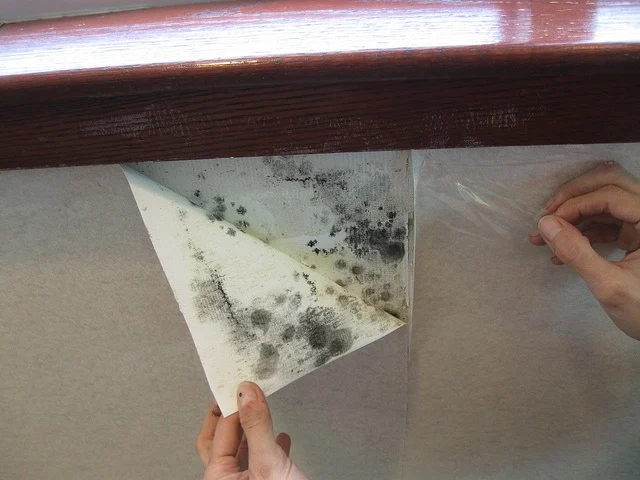
TIP: Beware of Mold Inspections that consists of simple air sampling in the middle of a room or “tape lifts” from general surfaces. Hidden molds inside ducts, in carpeting or inside wall cavities are rarely detectable with this methodology.

3. Seek Professional Help: If the landlord or Management Company doesn’t respond appropriately, or if you are not able to sufficiently document the mold problem, consider hiring a professional mold inspection company like Indoor Environmental Testing to provide an objective assessment and help bolster your case if you need to pursue further action. This step would likely be necessary if you plan to pursue legal action so confirm that the inspection company offer litigation support. The advantage here is that you will receive the inspection reports with the inspector’s findings.

If a mold problem is found, ask for reimbursement for your expenses related to the mold. Request that the mold problem be addressed according to the recommendation outlined in the inspection report.

The biggest and most common mistake landlords make at this point is to have their maintenance staff handle the remediation. This is a high risk step for all because improper handling of mold contaminated materials can cause cross contamination to the HVAC system and severe damage to the tenant’s furnishing and belongings. If this happens, cover all your belongings and furniture with plastic and have a mold professional test them when the remediation has been completed to verify that your things were not contaminated.

4. Legal Consultation: If your landlord does not respond appropriately, seek legal advice. A lawyer specializing in tenant rights can guide you on how to proceed, whether that involves mediation or filing a lawsuit.

Conclusion

Mold in your rental apartment, condo, town home or house is more than just an annoyance; it’s a potential health hazard that demands immediate attention. Understanding your rights as a tenant is crucial in addressing this issue effectively. By documenting your situation, communicating with your landlord in writing, and taking appropriate action, you can work towards ensuring a safe and healthy living environment. Always consider consulting a legal professional if you’re unsure about your rights or the best course of action.

For further assistance or to discuss your situation, feel free to reach out. Let’s ensure your living space stays safe and healthy! For a mold inspection, contact us at 1.800-692.4783 (serving Madison, WI, Knoxville and Nashville, TN)

Here are some possible contacts for legal advice.

Nashville:

  • Ann Peldo Cargile: Bradley Arant Boult Cummings LLP.
  • Connie Chadwick
  • Robert E. Lee Davies, Jr.: Puryear, Newman & Morton
  • Freeman & Fuson
  • Davis Law Firm

Madison:

  • Linda Monroe, Monroe Law Office
  • Community Justice, Inc (CommunityJusticeInc.org)
  • Steven C. Wheeler, Wheeler Equal Rights Law
  • Damon Etawlyah & Marin Smith, Small Axe Cooperative (Sliding Scale Available) 

Knoxville:

In Tennessee, contact

  • Tennessee Consumer Affairs Division for mediation services
  • Tennessee Fair Housing

In Madison, WI, contact The Tenant Resource Center Rental Rights Hotline 608-257-0006
Toll-Free: 877-238-RENT (7368)

For reliable information about mold, visit these websites:

  • https://www.epa.gov/mold/mold-cleanup-your-home
  • https://www.cdc.gov/mold-health/about/clean-up.html

Mold Health Effects: 5 Tips to Stay Safe

Mold—a word that might make you shudder, and for good reason. Often lurking in hidden corners or damp spaces, mold is more than just an unsightly inconvenience. It can pose serious health risks, especially to certain vulnerable groups. In this blog, we’ll explore how mold affects health, who is most at risk, and what you can do to protect yourself and your loved ones.

What is Mold and Where Does it Grow?

Mold is a type of fungus that thrives in damp, humid environments. Found both indoors and outdoors, it spreads through airborne spores. Common indoor sources include leaky pipes, poorly ventilated bathrooms, and basements with moisture issues.

Fun fact: Did you know that mold spores are nearly everywhere, but they only grow into colonies when given the right conditions? Unfortunately, those “right conditions” often overlap with our living spaces!

The Health Risks of Mold Exposure

Mold exposure can lead to a range of health problems, depending on the type of mold, the level of exposure, and an individual’s susceptibility. Here’s a breakdown of common effects:

Respiratory Issues: Mold spores can irritate the respiratory system, causing coughing, sneezing, and throat irritation.

Allergic Reactions: Many people are allergic to mold, which can trigger symptoms like itchy eyes, a runny nose, or skin rashes.

Asthma Complications: For those with asthma, mold can exacerbate symptoms or even trigger attacks.

Chronic Effects: Prolonged exposure to toxic molds, like *Stachybotrys chartarum* (commonly known as “black mold”), has been linked to more severe issues like memory problems, fatigue, or lung inflammation.

Children, the elderly, and those with compromised immune systems are particularly vulnerable to mold’s effects.

Signs of Mold in Your Home

Mold doesn’t always announce itself with a musty smell or visible patches. Other signs include:

– Persistent water stains or peeling paint.

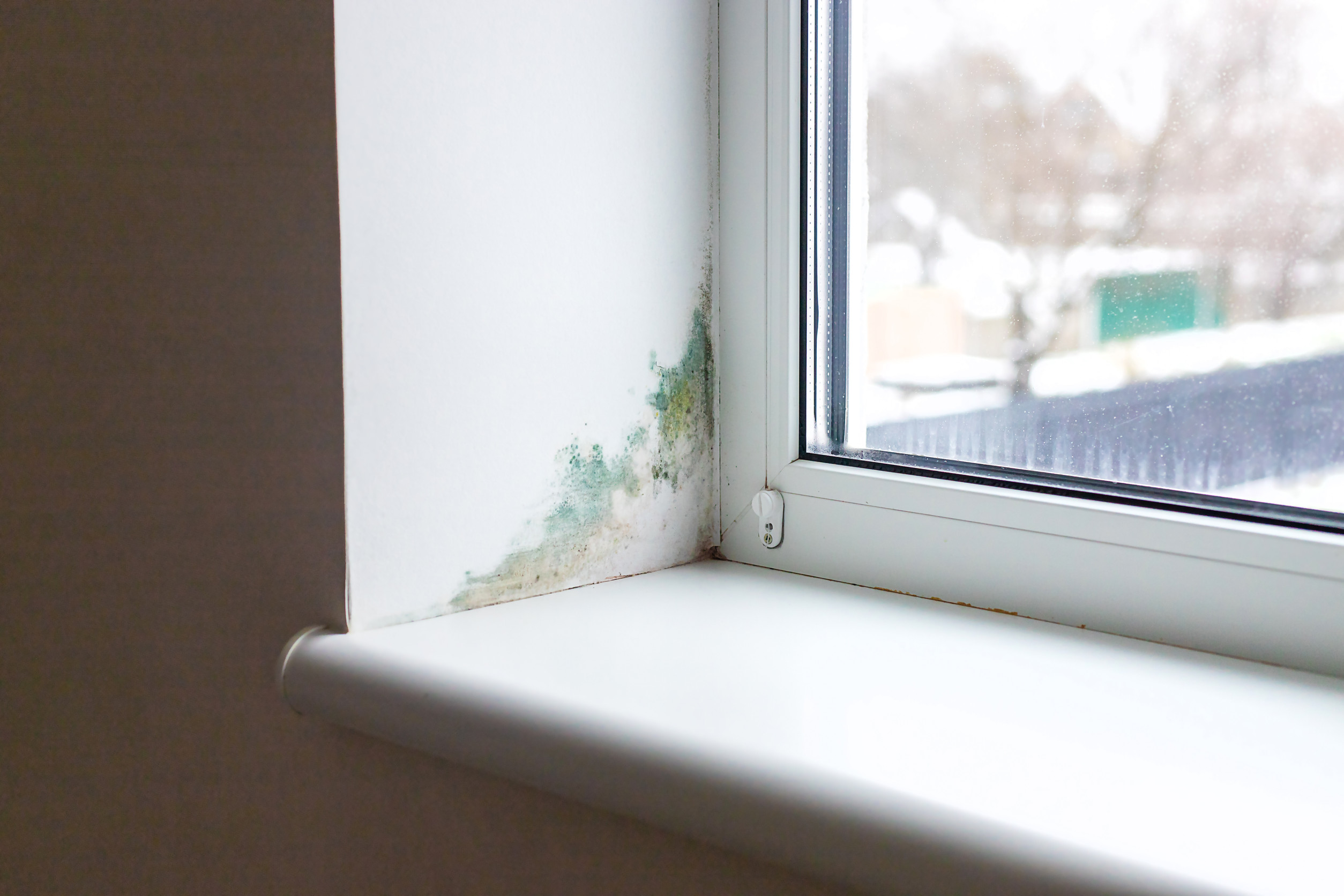
– Increased humidity or condensation on windows.

– Health issues among family members that improve when they’re away from home.

Preventing and Addressing Mold

To keep mold at bay, try these tips:

1. Control Humidity: Aim for indoor humidity levels below 60%, ideally between 30-50%.

2. Fix Leaks Promptly: Whether it’s a dripping faucet or a roof leak, address moisture sources quickly.

3. Ventilation is Key: Use exhaust fans in bathrooms and kitchens, and ensure proper airflow throughout your home.

4. Regular Inspections: Check damp areas like basements, under sinks and behind toilets sinks for early signs of mold.

Thermal imaging device

5. Professional Help: If mold infestation is significant, consult a mold expert. A few hundred dollars for a mold inspection can end up saving thousands of dollars in damage

Conclusion

Mold is more than just a household nuisance; it’s a genuine health concern that warrants attention. By understanding its risks and taking proactive measures, you can create a safer and healthier environment. Remember, the battle against mold starts with awareness. Share this blog with friends and family—they might thank you for it!

For more information about Mold’s Health Effects, visit the CDC web page about mold

Should you buy a house with a crawl space?

When buying a house with a crawl space, potential extra costs include: crawl space encapsulation (to prevent moisture and pests), repairs for existing moisture damage like wood rot, additional insulation, pest control treatments, and potential structural repairs related to water damage; all of which can significantly add to the purchase price of the home.

Moisture is the plague of crawl spaces everywhere and is a big deal because it can impact finances and physical health. So what are the consequences of moisture in a crawlspace?

#1: Energy Costs

Vented dirt crawl spaces are costly since they create damp conditions upstairs, which requires more energy to heat. Damp air also puts more strain on an HVAC system.

Taking care of humidity problems in a crawlspace can save 15-25% depending on the size of the house, whether ducts are located in the crawl, how many stories the house has, etc.

Simply caulking around windows doesn’t fix the problem.

#2: Pests

A moist and moldy crawl space attracts pests. Rodents, insects, snakes and more can make their way into the home; some die in the crawlspace. As they decay, they create offensive odors that rise into the occupied space.

High humidity conditions in the living space invite dust mites and their droppings. These droppings exacerbate symptoms for allergy and asthma sufferers.

A moist crawlspace also favors termites due to the abundance of wet wood and since homeowners rarely visit their crawlspace, they don’t know that the home is being eaten away from the inside.

#3: Mold

Moisture settles on exposed surfaces, including joists, beams, fiberglass insulation, and drywall. As long as moisture is present, mold grows and spreads. If you’ve ever visited an older home and smelled a musty odor, mold probably was the culprit and 9 times out of 10, that musty odor comes from a basement or crawl.

Photo courtesy of Santa Fe Dehumidifiers

Mold in the crawl (or basement) has a direct impact on people living in the home. Because of the “stack effect,” air moves from below-grade spaces into the upper levels of the house. Warm air travels upward and escapes through cracks, windows, vents, and other openings. As the air rises, it carries allergens, spores, soil gases like radon, mold gases, dust, and harmful elements that infiltrate the living space. This often causes asthma, allergies, and respiratory problems for occupants.

#4: Rot

Moisture leads to mold and mold leads to rot. Rot eats away at wooden joists, beams, and drywall. It causes structural issues, like spongy floors, doors and windows that don’t close properly, buckling or sagging floors.

The options are to fix the moisture problem or replace floors and repair the foundation. 

Controlling humidity and water intrusion are essential. To accomplish that, an encapsulation system, dehumidifier and sump pump are usually recommended.

The Solution

Crawlspace encapsulation by a crawlspace expert will insulate damp earth and keep the area airtight, dry and energy efficient. A vapor barrier is installed on the walls and floors of the crawl, preventing water vapor and humidity from reaching vulnerable surfaces like joists and subfloor. The liner is mold and mildew resistant and usually comes with a 25-year warranty. This liner creates an inhospitable environment for pests and prevents summer heat and winter cold from invading.

Then a large dehumidifier is installed. These are usually efficient, low-maintenance systems that come with a 5-year warranty and are designed for usage in below-grade spaces. Ideally, the contractor will install a crawl space door composed of inorganic materials (foam board or plastic) not susceptible to rot and rust. It’s crucial to create an airtight seal between the crawl and outside air.

If necessary, your contractor may also recommend a drainage matting system to be installed underneath the liner to direct water to a perimeter drain and sump pump system to keep water from pooling and creating long-term damage.

The adage “you pay now or pay later” certainly applies to crawl spaces!

For more information about crawlspaces visit https://www.fema.gov/about/glossary/crawlspace and

https://www.energystar.gov/saveathome/seal_insulate/basement_crawlspace