
The mold is inside the wall so it can’t hurt anybody … or can it??
“It’s inside the walls so it can’t hurt anybody”
As mold inspectors, we hear this almost daily … This phrase has been uttered by countless builders, landlords, property managers, maintenance personnel, handymen, homeowners, even doctors and mold inspectors themselves!!
 So what’s the story on mold inside walls?

People wrongly assume that mold spores are what makes people sick. There are many more components of mold that can be harmful. Yes, it’s true that, in most cases, mold spores do not come out of a wall and into the occupied space, however molds produce toxic gases called MVOCs (Microbial Volatile Organic Compounds) and poisonous mycotoxins, like Trichothecenes for example.
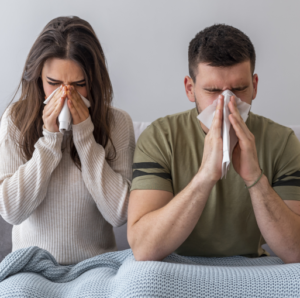
These gases and chemicals CAN easily travel out of wall cavities in the same way sewer gas or carbon monoxide can. They can circulate through electrical outlets, small cracks and under the baseboard. They CAN and DO affect occupants, sometimes in a major way.
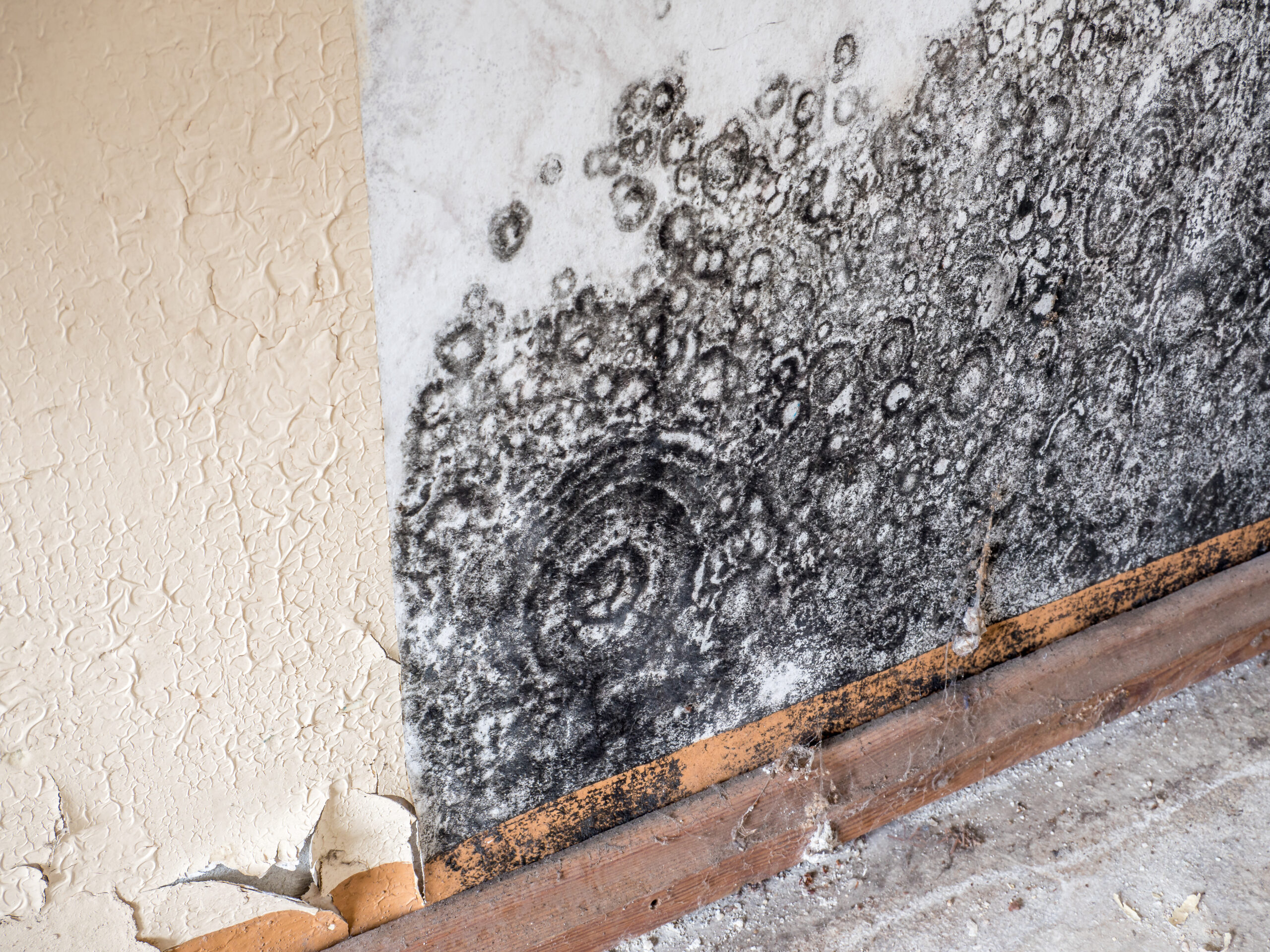 For example, an office worker complained of severe headaches, flu- like symptoms, and brain fog when she was in the office. Symptoms went away during weekends when she was home. Her boss was skeptical that anything was wrong with the office but a cavity test of the wall behind her desk revealed Stachybotrys (aka Toxic Black Mold). A roof leak has caused water to drip into the wall cavity and water was pooling behind the baseboard causing active growth. In another case, a woman complained of dizziness any time she was at the kitchen sink. Testing of the area underneath and behind the sink revealed a large quantity of Stachybotrys, aka “toxic black mold“.
Microbial gases are responsible for the musty smell that we associate with mold. If we don’t see mold, sometimes the musty odor is the only sign that mold is present in a room but sometimes, there is no odor to warn us so we can be exposed unknowingly.
With advances in technology, we can now test household dust to confirm that mycotoxins are indeed produced and coming out of wall cavities by matching the mold in the wall with the mycotoxins found in the home dust. The old thinking was that you had to ingest mycotoxins from foods for them to make you sick but we now have evidence that touching or inhaling mycotoxins can poison people and animals.
If the water intrusion has stopped and mold has dried up, what happens?
Mold is no longer active (it is dormant) and may not produce a gas so all is good right? Not so fast! When mold dries up, it becomes more brittle and lightweight and a few spores can become hundreds of microscopic mold fragments that are very inflammatory and able to easily travel and get out of the wall. How do we know this? Because air samples show no abnormalities but DNA testing of the dust in that room will reveal its presence in the room dust! Mycotoxins hitch a ride on dust an these can be found in the room dust too. In addition, molds inside walls could reactivate any time the temperature and humidity are just right so as a precaution, it’s best to safely remove moldy materials.
Mold growth is often accompanied by bacterial growth and mycotoxins production. Bacteria produce toxic by-products called endotoxins which have been shown to cause chronic airway disease in mice. Some scientists believe these are even more poisonous than mycotoxins and mold-literate doctors are now asking patients to test their homes for both mycotoxins and endotoxins.
So mold inside walls should never be ignored unless the quantity is minute. It must be removed with proper controls by a professional mold remediation contractor who will use plastic containment, air scrubbers with negative air pressure and make sure mold will not be dispersed into the rest of the home. Once the mold is removed, the surfaces will then be disinfected and dried.
For more information about mold’s health effects visit the US EPA Mold Page
For information about Biological Pollutants in your home, see this article https://www.epa.gov/indoor-air-quality-iaq/biological-pollutants-impact-indoor-air-quality#Health_Effects and this information from the CDC about biotoxins


 We’re very excited to launch a new website for Indoor Environmental Testing! The new website has a modern look, and easier for find information about Indoor Air Quality (IAQ) Assessments, Mold Inspections, EMF Testing, and Commercial Air Quality & mold testing services.