
Carpeting in a basement often creates problems because the environment is fundamentally different from upper floors. Concrete slabs routinely transmit moisture vapor from the soil below, even when there is no visible water intrusion. Basements also tend to run cooler, which means warm indoor air can condense on or within materials near the floor. Carpet and padding are porous and absorbent, so they hold that moisture rather than allowing it to dry. Over time, this creates conditions where mold and bacteria can develop out of sight, and odors can build up without an obvious source.
Another issue is that carpet systems hide what’s happening underneath. On a hard surface, moisture problems are usually visible—discoloration, efflorescence, or damp spots. With carpet, those warning signs are concealed. The padding can stay damp for long periods, especially in low-airflow basement conditions. If a small leak, minor seepage event, or elevated humidity occurs, the carpet can become a reservoir for microbial growth. By the time a musty odor is noticeable, contamination may already be established within the carpet and pad, making simple cleaning ineffective.
The EPA advises against installing carpet in basements or any areas with chronic moisture problems.
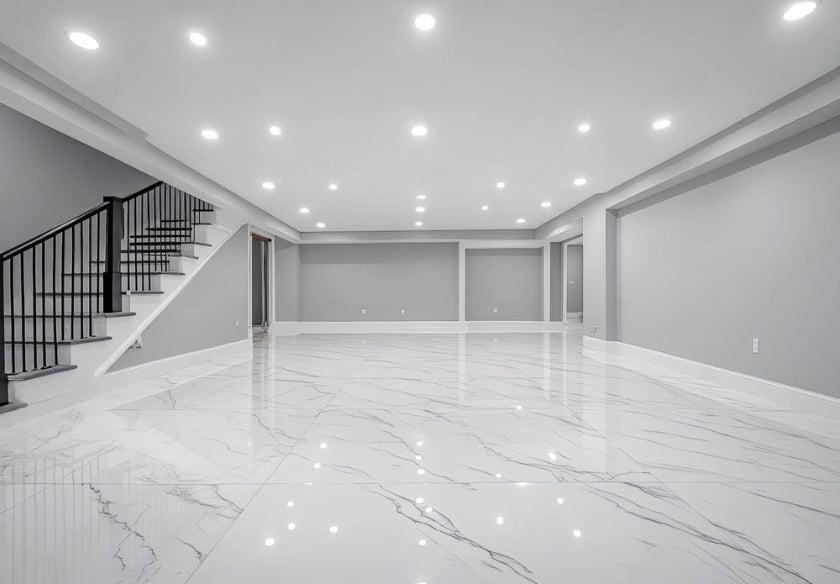
If You Still Want Carpet: What Must Be Done First
If carpeting is going to be installed over a basement slab, moisture control has to be addressed first. This starts with verifying that the slab is dry using appropriate moisture testing, not just visual inspection. A continuous vapor barrier should be installed between the concrete and the finished flooring system to limit moisture migration. In many cases, a raised subfloor system that creates an air gap between the slab and the carpet is advisable. Dehumidification is also essential—basements should typically be maintained in the 40–50% relative humidity range year-round to reduce the risk of condensation and microbial growth.
Material selection and maintenance practices also matter. If carpet is used, it should be paired with moisture-resistant or low-absorbency padding rather than traditional foam padding that readily retains 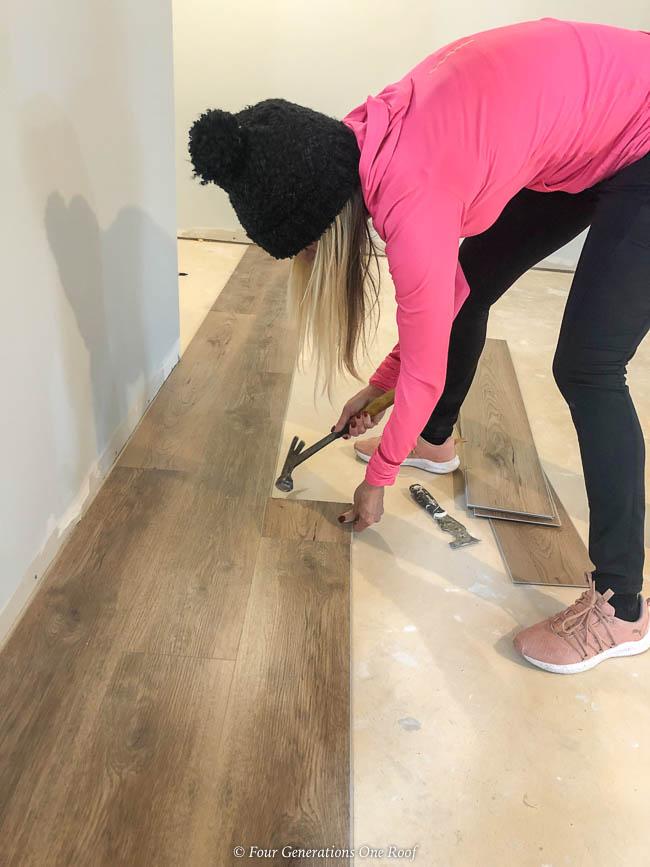 water. The space should have consistent air circulation, and any signs of moisture—odors, dampness, or spills—should be addressed immediately. Even with these precautions, carpeting remains a higher-risk flooring choice in basements.
Better Flooring Choices for Basements
For homeowners looking to reduce mold risk, non-porous or moisture-tolerant flooring options are generally a better fit for below-grade environments. Sealed concrete is one of the most reliable choices, as it eliminates layered materials that can trap moisture and is easy to clean and monitor. Luxury vinyl plank (LVP) and luxury vinyl tile (LVT) are also commonly used because they are water-resistant and do not absorb moisture like carpet or wood products.
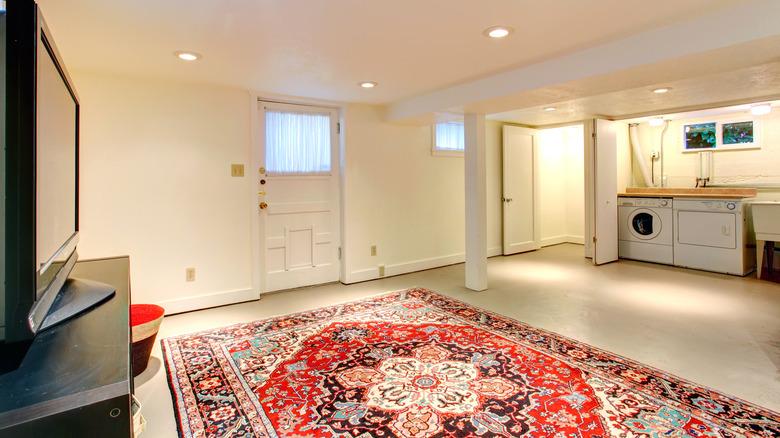
These materials can perform well when installed over a proper vapor barrier and are less likely to support mold growth.
While LVP and similar products are often marketed as “waterproof,” that only applies to the material itself—not the conditions beneath it. If there is not an adequate vapor barrier between the slab and the flooring system, moisture can accumulate underneath the planks. This creates a concealed environment where mold can grow on the underside of the flooring or on the slab surface. In these cases, homeowners may notice a persistent musty odor even though the flooring looks clean.
Proper installation—including moisture testing and use of a continuous vapor barrier where needed—is critical to avoid these issues.
Additional Low-Risk Options
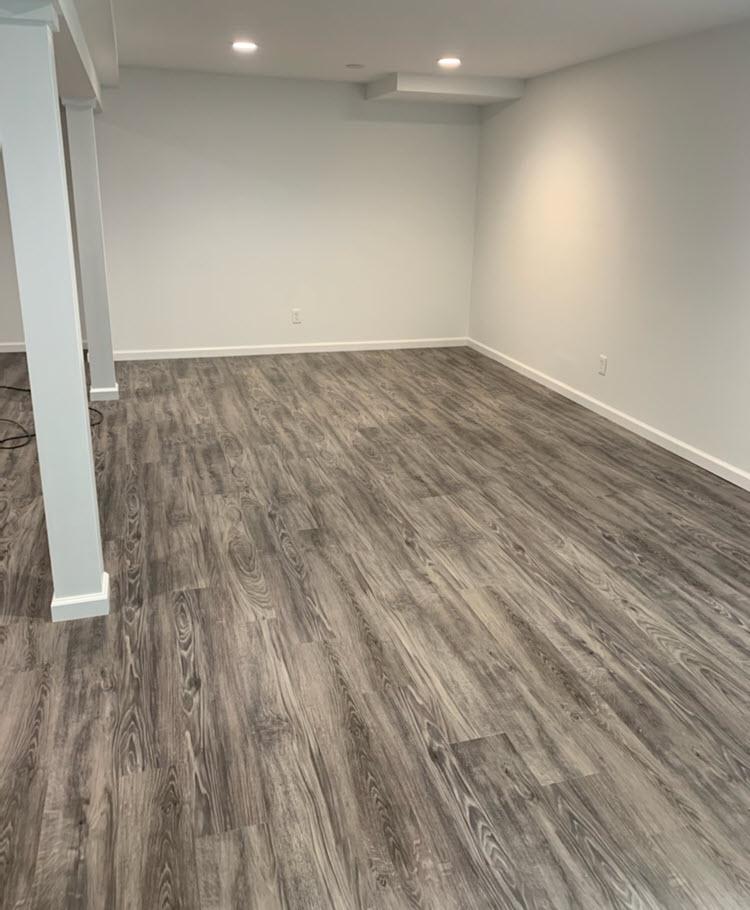 Other alternatives include ceramic or porcelain tile, which are highly resistant to moisture and durable over time. If a warmer surface is desired, removable area rugs can be used on top of hard flooring rather than installing wall-to-wall carpet. This allows for easier cleaning and removal if moisture issues arise. In situations where a finished look is needed but moisture remains a concern, engineered subfloor panel systems paired with moisture-resistant finishes can provide a more controlled assembly.
Final Thought from a Building Biologist
“Basements don’t behave like the rest of the house. When you put absorbent materials like carpet directly over concrete, you’re often creating a hidden moisture trap. The problem isn’t always visible—but the air quality impact is real.”
— Martine Davis, Certified Building Biologist
Regardless of the flooring choice, controlling humidity and managing water at the source remain the most important factors in preventing mold in basement environments.
Related Posts
Why She Smells It and He Doesn’t

Surface Mold in Your Home: New Study Shows It Becomes Airborne in Seconds

The Debilitating Path of Environmental Illness — And Why So Many Homes “Test Clean”

HVAC Systems: The Silent Distributor of Contamination

Why Your Last Mold Inspection Found Nothing (But You’re Still Sick)
